
Chasing 430, Conceding 429: The Bowling Question Beneath Sri Lanka’s Rawalpindi Win
**मुख्य उत्तर:** श्रीलंका पुरुष क्रिकेट टीम ने रावलपिंडी में इंग्लैंड पुरुष क्रिकेट टीम के 429 रन के जवाब में 49.5 ओवर में 8 विकेट पर 430 रन बनाकर दो विकेट से जीत दर्ज की। यह पुरुष वनडे इतिहास का दूसरा सबसे बड़ा सफल चेज़ बताया गया है। **मुख्य तथ्य:** • लक्ष्य 430; 50 ओवर में जरूरी दर 8.60 रन प्रति ओवर; 49.5 ओवर में हासिल दर लगभग 8.63 रन प्रति ओवर। • श्रीलंका ने 8 विकेट गंवाए; आखिरी गेंद पर जीत; दो विकेट शेष रहे। • इंग्लैंड ने पहली पारी में 429 रन बनाए; श्रीलंका की गेंदबाजी ने लगभग 8.6 रन प्रति ओवर लुटाया। • 2006 में दक्षिण अफ्रीका ने ऑस्ट्रेलिया के 434/4 के जवाब में 438/9 बनाए थे; लक्ष्य 435 था, 434 नहीं। • उपलब्ध रिपोर्ट में खिलाड़ियों के नाम, टॉस, पिच विवरण और प्रतियोगिता का सटीक नाम नहीं है। **स्रोत:** आईसीसी मैच रिपोर्ट; प्रकाशन तिथि उपलब्ध नहीं। **संबंधित प्रश्न-उत्तर:** प्रश्न: क्या यह पुरुष वनडे का सबसे बड़ा चेज़ है? उत्तर: नहीं, उपलब्ध रिपोर्ट के अनुसार यह दूसरा सबसे बड़ा सफल चेज़ है; सबसे बड़ा 2006 में दक्षिण अफ्रीका का 438/9 रहा। प्रश्न: श्रीलंका की जीत का सबसे बड़ा संकेत क्या है? उत्तर: 430 का पीछा करने की क्षमता बल्लेबाजी की गहराई दिखाती है, पर 429 लुटाना गेंदबाजी की गंभीर चिंता बनाता है। प्रश्न: इस मैच से विश्व कप की तैयारी के बारे में क्या निकलता है? उत्तर: यह जीत भरोसा देती है, लेकिन एक रिकॉर्ड चेज़ सीमित नमूना है; नियमित गेंदबाजी प्रदर्शन ही असली मापदंड है।
49.5 overs. From the second balcony in Rawalpindi, the roar arrived before the reason. Sri Lanka’s men’s cricket team had just completed a chase of 430 against England’s men’s cricket team, finishing on 430 for 8 in 49.5 overs. Two wickets remained, one ball was left, and the ground seemed to hold its breath as one body. I have watched ODI chases from commentary boxes for four decades; in such moments the scoreboard is the last thing that speaks.
This win will be filed as history. A chase of 430, the final ball, two wickets in hand, and the second-highest successful chase in men’s ODI history — all of it arrived in one evening. The most important number, though, is not 430. It is 429. England made 429. Sri Lanka conceded 429. The scoreboard that nobody frames is the one that tells the future.
The available ICC match report does not name players, does not provide a full scorecard, and says nothing about the toss, the pitch, or the exact name of the competition. Rawalpindi is in Pakistan, which makes it neutral territory for both sides. The report frames the win as preparation for next year’s ICC Men’s Cricket World Cup. Filling the missing information with assumption would be unfair to the match. Individual performances, therefore, are not being judged here; the shape of the game is being read from what is public.
The structure is clear. England made 429. Sri Lanka needed 430 in 50 overs, a required rate of 8.60 runs per over. They reached 430 in 49.5 overs, an achieved rate of about 8.63. Eight wickets fell. The match went to the penultimate ball. That number captures the tension of the entire innings: there was almost no over in which the chase could breathe. Sustaining that rate for 50 overs is roughly 40 to 45 percent above the modern men’s ODI par scoring rate.
Modern men’s ODIs commonly sit around 5.9 to 6.1 runs per over. An 8.6 rate can happen for one over or ten; holding it for 50 is a different feat. This innings is an outlier in the structure of the match, not a normal proof of one batter’s form. The powerplay cannot deliver 430 on its own; six overs of fielding restrictions do not stretch that far. The middle overs had to maintain momentum, and the last ten had to produce boundaries under pressure. Eight wickets falling means risk was taken repeatedly, and sometimes the risk cost a wicket.
Rawalpindi has historically been among Pakistan’s higher-scoring surfaces, but this match’s pitch, boundary dimensions and seam movement are not confirmed in the report. The 429 makes a batting-friendly surface plausible, but that is inference, not fact. Weather, dew and DLS interventions are not mentioned; the absence suggests a completed, uninterrupted match. The toss is not described. With those gaps, one thing is certain: the 429 made and the 430 chased belong to the same evening at the same ground.
An England-Sri Lanka ODI in Rawalpindi is procedurally unusual. Neither side is at home. It could be part of an ICC event, a tri-series, or a relocated bilateral series. The report does not resolve it. That uncertainty prevents us from reading the match inside a tournament context. The neutral venue does, however, make one point clear: this win did not come with home-ground help.
The wicket cost is the most interesting number in the chase. A target this size usually implies one long, unbroken partnership. Here eight wickets fell and the rate did not stop. The team traded wickets for runs. No single anchor carried the innings to the end; lower-middle order depth and batting to No. 8 and 9 did the work. That is a selection-policy signal, not a single-hero story.
If Sri Lanka made 430 for 8, their batting order had genuine depth. The eighth and ninth batters had to be at the crease on the final ball. This is not a top-heavy side. Against England’s bowling, that depth spread the pressure. One batter’s hundred does not make 430; at least one large hundred and two or three meaningful fifties are required. The report gives no names, so crowning anyone would be premature. The arithmetic says at least one hundred at a strike rate above 100, or two to three scores in the 70s and 80s at 95-plus, must have been part of the innings.
Batting depth is not only this match’s story; it is a selection question. When No. 8 and No. 9 are on the final ball, the top order knows there is help below. That trust encourages aggression. In a long World Cup, such depth matters. Depth only counts, though, when the bowling can support it. A side that chases 430 must also be able to defend 300 in the next match.
Look at England. Conceding 429 in 50 overs is not one bad over. The team economy was around 8.6 runs per over. That is a death-bowling failure, a fielding-placement failure, and a bowling-plan failure. England’s white-ball model, which won the 2026 World Cup, was built on batting depth and an aggressive top order. When that same side cannot defend 429, the question sits inside its own model, not outside it. England’s real defeat was in the bowling, not the batting.
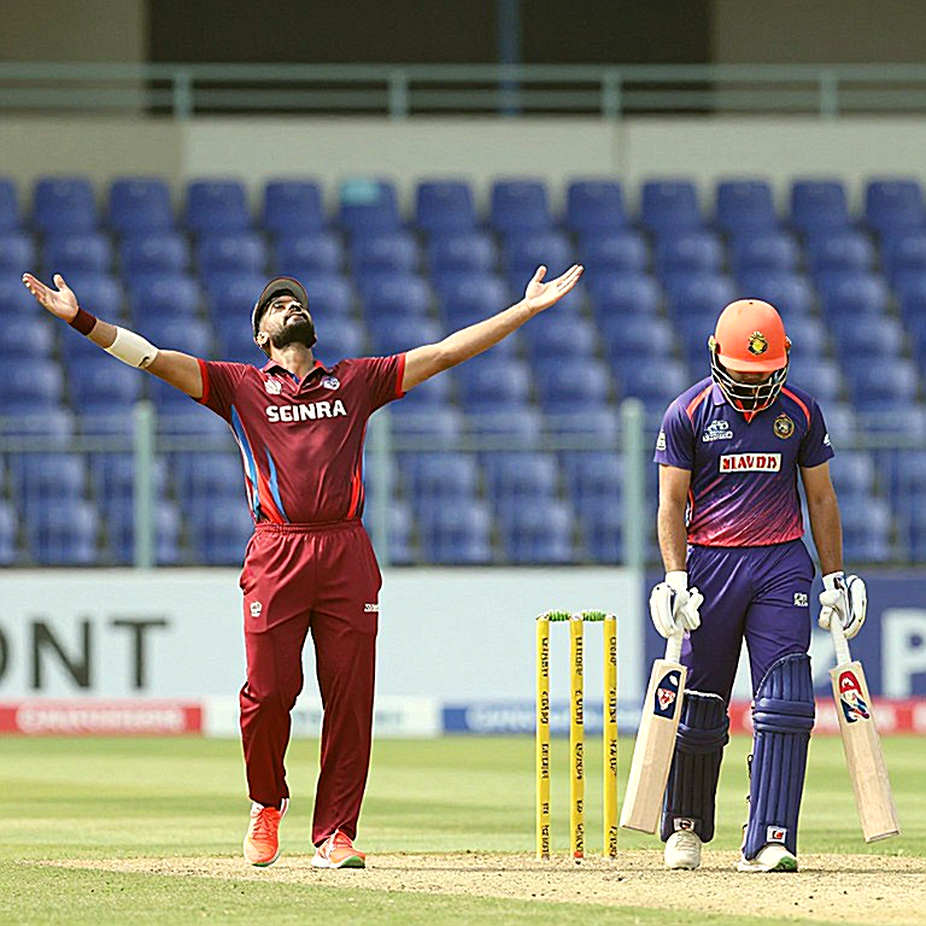
Death bowling is a separate skill. Yorkers, slower balls, wide yorkers, changes of pace and field placement have to work together. A 429 total means several of those plans failed. If England’s bowlers kept hitting one line, the batter could set himself. If they changed too much, wides and full tosses followed. Without ball-by-ball data, the exact error cannot be named; the 8.6 economy says the plan did not work.
For England, this defeat breaks their own logic. The side considered best equipped to defend 400-plus totals could not stop a chase of 430. The review will focus on batting because 429 is a huge score. The real review should focus on bowling and fielding. This is a rare case where a 400-plus total hides a bowling problem.
The psychology of 429 matters. When you make 429, the dressing room believes the score is safe. Attacking fields are set; the captain looks aggressive. As soon as the chasing side moves at 8.6, that belief cracks. The captain becomes defensive, fielders go to the boundary, and singles become easy. That psychological shift does not appear in the scorecard, but it changes the match.
Read the record claim coolly. If this is the second-highest successful chase in men’s ODIs, it is only the second successful 400-plus chase in the history of men’s ODIs. The first came in 2026. Two such events in about twenty years. Across thousands of men’s ODIs, this is an extreme tail event, not a repeatable capability. Sri Lanka showed their ceiling, not their average.
The second-highest label also needs care. The report does not set out which format’s list it is using, or which matches are included. If it is the second-highest successful chase in men’s ODIs, that is significant. “Second” does not mean “normal.” One innings is not enough to establish a batting system.
The 2026 reference needs correction. It is commonly said that South Africa chased 434 against Australia. The scorecard reads: Australia 434/4, South Africa 438/9 in 49.5 overs at the Wanderers, Johannesburg, on 12 March 2026. The target was 435, not 434. Calling it a 434-run chase is a compression error, not a substantive one. The finish was also on the penultimate ball. That is coincidence, not signal.
One more comparison with 2026 holds: both matches went to the final ball. A side chasing 400-plus also tires at the end. In an innings this large, a moment arrives when runs become hard. The team that finds one boundary in that moment wins. Calling it planning is easy; calling it luck is also easy. The truth sits between.
Because the Stage-1 material gives no player names, the biggest risk is a media narrative that crowns one batter. Without a scorecard, no technical conclusion is defensible: footwork, spin play, pace plans, temperament. What can be said is arithmetic. To make 430 in 299 balls, the innings must have contained at least one 110-plus score at 100-plus strike rate, or two to three 70-90 scores at 95-plus, plus a functioning lower order.
There is an advantage in the anonymity. We do not fall into the trap of writing a new star into existence. Indian cricket has seen this often: one innings creates a headline, and two months later the same player is attacked for a technical flaw. The chase deserves credit, but the credit should rest on the scorecard, not the television strap.
Sri Lanka’s traditional identity is built on spin-friendly home surfaces. Colombo and Galle turners are where their main weapon lives. Chasing 430 in Rawalpindi is the opposite route. This win shows that Sri Lanka’s batting can produce a world-class rate for one day. It also shows that the structural bowling problem has not been solved. A match in which you concede 429 allows the celebration to cover the bowling concern.
The spin inheritance does not disappear because of this match. Rawalpindi’s surface kept Sri Lanka away from the game in which they are strongest. The World Cup will be played in different conditions; spin may play a different role. The question is whether Sri Lanka have a Plan B in pace to defend 430. This match did not answer that question. It sharpened it.
This match should be read as evidence of a ceiling, not of a floor. Sri Lanka showed they can chase 430; that does not prove they can keep any side under 300 every time. For tournament forecasting, 429 is the more useful number, because bowling economy is more stable across matches than extreme batting innings. Ranking movement should not be inferred without the ICC’s rolling calculation.
Bowling economy deserves that weight because it changes gradually. A batting side can make 430 one day and 230 the next. Sri Lanka’s real challenge is not repeating 430; it is reducing 429. If they keep opponents around 300 over the next three matches, this win can become a beginning.
The ICC report frames the win as World Cup preparation. That makes sense. Such a win builds belief. The belief, though, rests on an exception. Sri Lanka’s coach and selectors will know that an 8.6 economy can become a serious problem in a World Cup. League stages reward median performance, not one evening’s record.
Preparation needs confidence, but it needs consistency more. Sri Lanka will play in different conditions: spin in some venues, pace in others. The ability to chase 430 matters only if it can be repeated under pressure. A record chase does not win a World Cup; bowling and fielding do.
Winning on the final ball means the result could have turned on one boundary or one dot ball. Two wickets in hand meant one more mistake was possible, but the margin was thin. This was not pure luck; making 430 under pressure is skill. It was not complete control either; a match taken to the final ball carries high variance. Sri Lanka’s win sits on the thin line between execution and fortune, the line cricket too quickly calls “clutch.”
The workload of a 50-over chase also matters. Heat, humidity and long spells raise the risk of soft-tissue injury. The report gives no weather or injury information, so no player’s health can be judged. The workload does affect the next match’s fitness plan. Recovery deserves the same seriousness as strategy.
The Rawalpindi crowd should not be turned into “Sri Lanka” or “the revival of cricket.” It was one evening in Rawalpindi, a neutral ground, two visiting teams and a local crowd. The cheap seats keep the honest score: who waited, who believed, who left early. Those who stayed to the final ball probably smelled the result before the scoreboard confirmed it. This crowd is not a nation. It is a city’s evening.
There is an easy temptation to turn that evening into a festival. I have seen it many times. This was a sporting contest between two teams. Calling it a rebirth of cricket is the same exaggeration that calls every big total a murder of the pitch. The cheap seats saw something simple: one team needed 430, and got them. We add the rest later.
I have always heard the crowd before the scoreboard. The noise on the final ball in Rawalpindi belonged to neither team alone; it was the tension of 49.5 overs released at once. The people in the cheap seats know how hard a 430 chase is. They did not leave early. That is their honest score.
Commercially, the match exposes the squeeze on bilateral ODI cricket. It is the international format caught between Test tradition and T20 league economics. A successful 430 chase is high-grade broadcast content: a clip, a thumbnail, a story. One record chase does not repair the format’s structural weakness. There is no franchise, auction or contract data here; this is pure international ODI.
Format discipline matters. The record is ODI-specific. It says nothing about Sri Lanka’s Test or T20 standing. One innings does not establish a batting system. Home-ground bias does not apply because the venue is neutral. There is no DRS controversy in the material. The remaining risk is the venue and competition anomaly: an England-Sri Lanka ODI in Rawalpindi needs verification before governance or commercial conclusions are drawn.
The missing list is long: toss, pitch, weather, boundary size, competition, player names, phase splits, bowling figures. Some conclusions must remain incomplete. What is certain is enough: 429, 430, eight wickets, one ball, a required rate of 8.60 and an achieved rate of 8.63. That is the spine of the report.
Collective memory will file this as “the 430 chase.” Record books work that way. Collective memory also has a blind spot: it remembers the winner’s feat and forgets the loser’s disclosure. England’s 429 and Sri Lanka’s concession of 429 are two halves of the same coin. If this match offers a forecast, it is not the capacity to make 430; it is the leakage of 429. The ground knew before the table did: champions fall in frequencies, not headlines.
England’s defeat teaches more than Sri Lanka’s win. Conceding at 8.6 in the death overs is not random. It raises questions about bowling plans, yorker capacity, slower-ball options and fielding preparation. England are among the leading contenders for the next World Cup; failing to defend 429 is a warning. For Sri Lanka, the warning is inverted: a side that can make 430 could not stop 429. Some defeats are not seen; they are felt through the concrete of the stadium.
The “astonishing batting brilliance” frame is attractive and incomplete. The pitch is unverified, the boundary dimensions are unknown, the toss is missing. Calling 430 pure technical wizardry is premature. Eight wickets falling shows the innings carried risk. A final-ball finish shows control was incomplete. The record is golden for broadcast; for bowling analysis it is an open wound.
There is a politics to records. A 430 chase is made for television; it becomes clips, thumbnails and headlines. ODI relevance is debated constantly, and such a match becomes an answer for a while. Format health is not measured by one record. The economic place of bilateral series, ticket prices and attendance are the harder measures.
England and Sri Lanka have a long bilateral history in which England have generally held the upper hand, while Sri Lanka have troubled them on the turners of Colombo and Galle. Rawalpindi does not overturn that pattern. It is one observation, not proof of a new order. Sri Lanka won by batting rate, the opposite of their traditional spin-based route. That is why this win should not be called a solution to their problem.
What should be watched next? Sri Lanka’s bowling economy, powerplay wickets and death-over plans over the next few ODIs. If they concede another 429-type innings, Rawalpindi will remain an isolated record. For England, the question is direct: how did a side that made 429 lose? The bowling coach and captain need a new death-over map.
Some wins arrive like records and some like questions. Rawalpindi was both. Sri Lanka made history with a 430 chase and conceded 429 in the same match. Before the next World Cup, the direction of this team will depend on which number it treats as the lesson. The question is whether this innings is a new beginning for Sri Lankan cricket, or a record that made its real weakness look luminous for one evening.